POPE LEO ACCUSED OF BEING ‘WEAK ON CRIME’
April 14, 2026
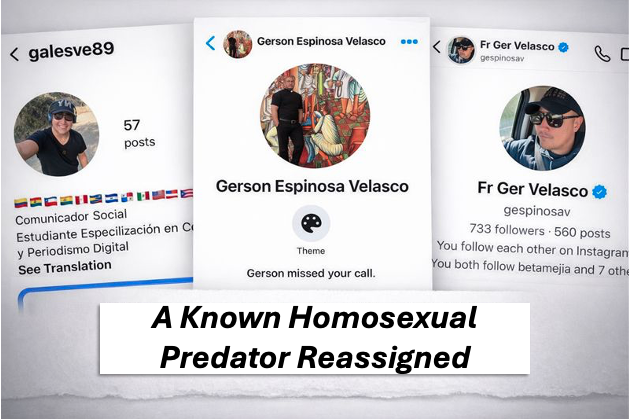
For years, warning signs surrounding Fr. Gerson Espinosa Velasco were allegedly ignored.
Now, according to conversations described by members of Clean The Church involving diocesan attorney Tom Caso and Vicar for Clergy Rev. Freddy Calvario, officials within the Diocese of Monterey allegedly acknowledged that Fr. Gerson Espinosa engaged in a sexual encounter with a vulnerable male parishioner identified in this article as “John Doe,” a pseudonym used to protect the individual’s privacy.
If accurate, the implications are explosive.
Because according to those involved in the conversations, diocesan officials allegedly did not deny that a sexual encounter occurred. Instead, they reportedly characterized the incident as “consensual” and merely “a sin,” despite the serious imbalance of authority between a priest and a vulnerable parishioner seeking spiritual guidance.
Critics say that response reveals exactly why the Catholic Church continues to suffer credibility crises decades after the clergy abuse scandals that devastated dioceses across the United States.
The Alleged Encounter With “John Doe”
According to information provided to Clean The Church, “John Doe” allegedly approached Fr. Espinosa seeking emotional and spiritual support.
The Diocese allegedly acknowledged the following:
- Fr. Espinosa invited the parishioner to a hotel room in San Jose, California.
- The hotel room was paid for with diocesan funds.
- Alcohol was purchased using Church funds.
- A forceful sexual encounter followed.
According to those present during the conversations, neither attorney Tom Caso nor Rev. Freddy Calvario allegedly disputed that a sexual encounter took place. Instead, the reported defense focused on the claim that the relationship was “consensual.”
But critics argue that framing fundamentally ignores both canon law and the realities of spiritual authority.
“Consent” Does Not End the Questions
Under modern Church reforms, particularly Vos Estis Lux Mundi, abuse of authority involving vulnerable adults is not dismissed simply because Church officials label an encounter “consensual.”
A priest occupies a position of extraordinary moral, emotional, and spiritual authority — especially over parishioners seeking counseling, guidance, confession, healing, or emotional support.
Critics argue that when a vulnerable person seeks spiritual guidance from a priest, invitations to hotel rooms, alcohol consumption, and subsequent sexual activity cannot simply be brushed aside as private moral failure.
For many faithful Catholics, the central question is no longer whether misconduct occurred.
The question is: Why does the Diocese appear more concerned with defending Fr. Espinosa than protecting the faithful and restoring trust?
The Diocese Was Warned Years Ago
What makes the situation even more disturbing is that concerns regarding Fr. Espinosa are not new.
On March 11, 2021, Clean The Church sent a formal warning letter to Bishop Daniel Garcia of the Diocese of Monterey demanding immediate action regarding allegations involving Fr. Gerson Espinosa and St. John’s Seminary in Camarillo.
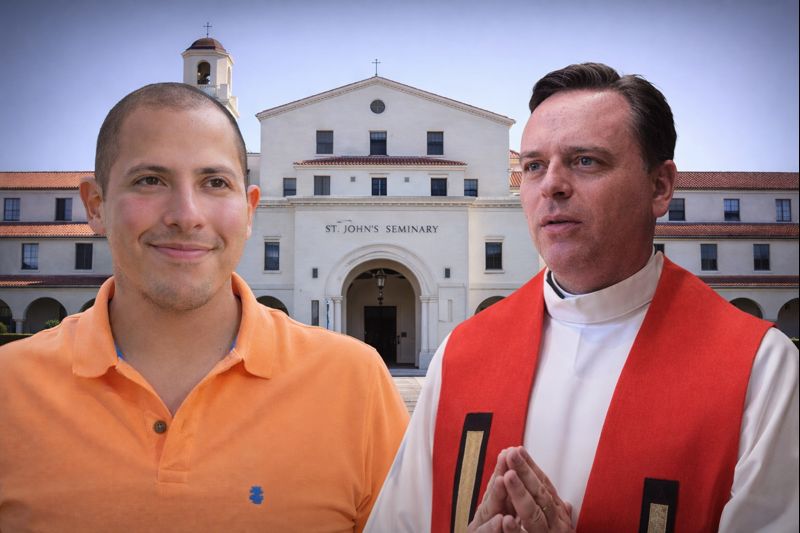
That letter warned the Diocese that whistleblowers had alleged serious misconduct involving seminarians, including claims that then-seminarian and later Fr. Gerson Espinosa had engaged in sexual misconduct and allegedly abused seminarians while connected to St. John’s Seminary.
The letter also alleged that Espinosa maintained an intimate relationship with former seminary rector Marco Durazo and warned that Espinosa’s role in youth ministry created what the authors described as a “clear and present danger” if the allegations proved true.
The Diocese was therefore allegedly on notice years before the current controversy erupted publicly.
Yet despite those warnings, Fr. Espinosa remained in ministry.
“A Cesspool of Corruption and Homosexual Predation”
The controversy surrounding Fr. Espinosa cannot be separated from broader allegations involving St. John’s Seminary in Camarillo.
In a 2021 investigative article titled “St. John’s Seminary: A Cesspool of Corruption and Homosexual Predation,” Clean The Church alleged that years of interviews with current and former seminarians revealed a culture of sexual misconduct, coercion, favoritism, and institutional protection inside the seminary.
That report alleged:
- former seminary rector Marco Durazo engaged in inappropriate relationships with seminarians, including Fr. Gerson Espinosa
- seminarians who resisted sexual advances were allegedly marginalized or dismissed,
- and Fr. Gerson Espinosa himself was allegedly tied to multiple incidents of misconduct involving seminarians.
The article further alleged that Church leadership, including officials connected to Cardinal Roger Mahony’s network, had long been aware of serious concerns but failed to act decisively.
Whether all allegations are ultimately proven or not, critics argue the pattern is deeply familiar:
warnings are ignored, complaints are minimized, priests are reassigned instead of removed, and scandal management appears to take priority over transparency.
“There Are Many Sinners”
Perhaps most shocking were comments allegedly made by diocesan attorney Tom Caso during the recent conversations.
According to individuals involved, Caso allegedly stated that there are “many sinners” within the priesthood in the diocese of Monterey while defending Fr. Espinosa.
Critics say the statement sounded less like accountability and more like normalization.
For many Catholics, that comment represents the deeper crisis inside portions of the clergy: misconduct is minimized internally as long as scandal can be controlled publicly.
Instead of transparency, removal, and investigation, critics say the Diocese appears focused on damage control and institutional protection.
Why Is Fr. Espinosa Still Around Youth?
Perhaps the most alarming question for many parishioners is why Fr. Espinosa reportedly remains active in ministry and involved with youth-related activities at St. Rose of Lima despite mounting allegations and controversy.
Several concerned parishioners have reportedly contacted Clean The Church expressing fear, outrage, and disbelief that diocesan leadership continues placing Fr. Espinosa in visible ministry roles.
Parents are now demanding answers:
- Was law enforcement notified?
- Did the Diocese conduct a Vos Estis review?
- Why was Fr. Espinosa not removed?
- Why does the Diocese continue exposing parishioners and youth to further scandal and risk?
A Growing Crisis of Credibility — And New Questions About Diocesan Leadership and the Role of Diocesan Attorney Tom Caso
This controversy is no longer only about Fr. Gerson Espinosa.
It is rapidly becoming a broader crisis involving diocesan leadership, seminary culture, accountability, and whether the Catholic Church truly learned anything from decades of abuse scandals and institutional coverups.
Increasingly, faithful Catholics are asking whether Church officials are once again repeating the same catastrophic pattern: minimize the allegations, protect the institution, avoid scandal, defend the clergy involved, and hope the public eventually moves on.
The controversy has now expanded beyond Fr. Espinosa himself and toward the actions and credibility of diocesan leadership — particularly diocesan attorney and Deacon Tom Caso.
According to individuals involved in conversations with Caso and Vicar for Clergy Rev. Freddy Calvario, diocesan officials allegedly acknowledged that a sexual encounter occurred between Fr. Espinosa and the vulnerable male identified in this article as “John Doe.” Yet rather than calling for removal from ministry or an aggressive independent investigation, the alleged response focused on characterizing the incident as merely “consensual” and “a sin.”
For many Catholics, that response was deeply disturbing.
Critics argue that the issue is not simply private sexual conduct, but the abuse of spiritual authority involving a vulnerable parishioner who reportedly sought emotional and spiritual guidance from a priest.
As outrage grows, many parishioners are now openly questioning why diocesan attorney Tom Caso appears to be defending Fr. Espinosa so aggressively instead of demanding transparency and accountability. Critics further argue that comments allegedly made by Caso — including statements that there are “many sinners” within the priesthood — reflect a dangerous culture of normalization and minimization surrounding clergy misconduct.
The credibility and judgment of diocesan leadership are now under increasing scrutiny.
Faithful Catholics are demanding answers:
- What exactly did diocesan officials know?
- When did they know it?
- Why was Fr. Espinosa allowed to remain in ministry despite years of warnings and controversy?
- Why was he reportedly allowed involvement with youth ministry?
- And how many warnings were ignored before another vulnerable parishioner allegedly became involved?
Many Catholics are no longer willing to remain silent.
The Diocese of Monterey now faces mounting pressure to answer publicly, transparently, and honestly.
The faithful deserve answers.
And increasingly, they are demanding them.